
Off Leash Dog Daycare Austin: Giving Dogs the Freedom to Choose


For many dog owners, the words Off Leash Dog Daycare Austin bring to mind dogs running across open spaces and playing with friends. But the value of off-leash time can go much deeper than simply giving a dog more room to move.
When a suitable dog has freedom within a supervised environment, they can make choices.
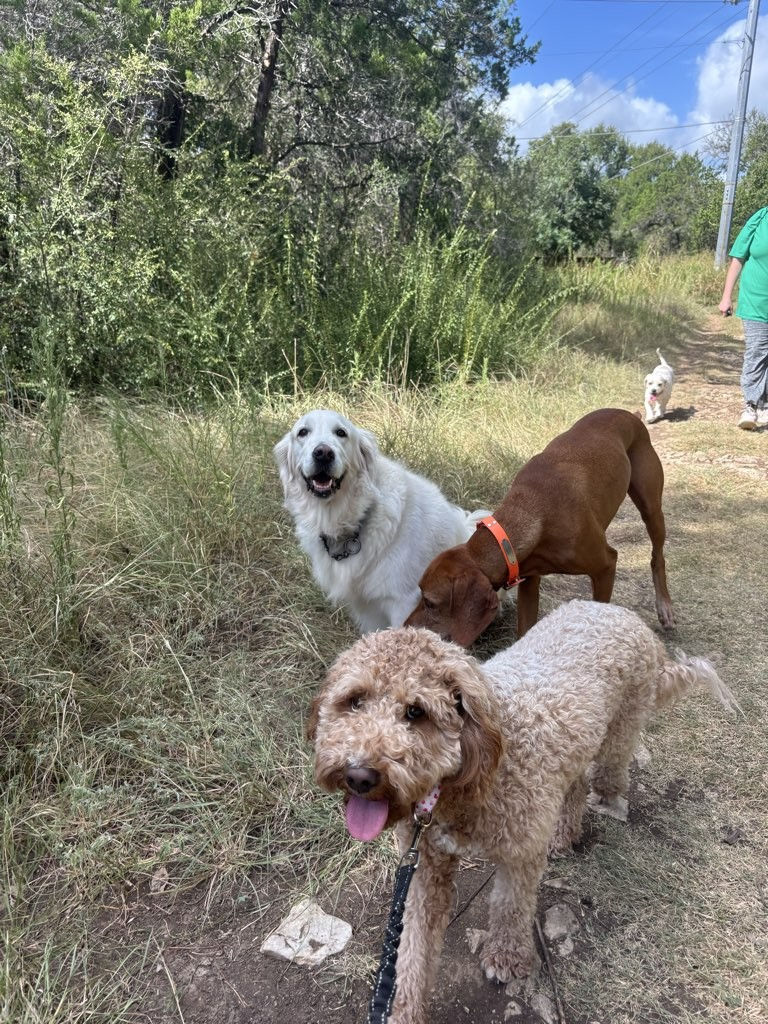
They can investigate an interesting scent. Join a compatible playmate. Move alongside the group. Pause to observe what is happening. Step away from an interaction. Find a comfortable place to rest before becoming active again.
At DogCentric Society, the goal isn't to keep every dog doing the same thing all day. A meaningful daycare experience recognizes that dogs have different personalities, social preferences, energy levels, and ways of enjoying the world.
That makes off-leash daycare less about unlimited freedom and more about giving dogs appropriate choices within professional care.
Off Leash Dog Daycare Austin Is About More Than Running
Physical exercise is important, especially for active dogs.
But measuring a daycare experience by how far or fast a dog runs misses much of what makes outdoor time interesting.
Once dogs have room to explore, they can decide what deserves their attention.
One dog might immediately become interested in a scent along the ground. Another may notice a familiar pack mate. A third may simply enjoy moving through the environment.
Those choices are part of the experience.
Off-leash time can give suitable dogs more flexibility to interact with their surroundings naturally while caretakers continue to supervise the group.
Some Dogs Play. Some Dogs Explore.
Dogs do not all enjoy daycare in the same way.
A highly social dog may look forward to interacting with compatible canine friends.
Another dog may enjoy being part of the group without spending the entire experience wrestling or chasing.
Some dogs are natural explorers.
They want to investigate vegetation, follow scents, move through different areas, and see what has changed since their last visit.
Others may move between several activities throughout the day.
They play for a while.
Then they explore.
Later, they spend time near the group without directly interacting.
None of these experiences automatically means one dog is enjoying daycare more than another.
Social Dogs Don't Have to Be Constantly Playing
Being comfortable around other dogs does not require constant physical interaction.
Dogs can share an environment without continuously playing.
Walking together, exploring the same area, resting nearby, and calmly moving as a group are all different forms of social experience.
This is one reason DogCentric's adventure-oriented approach can be different from the stereotypical image of daycare as a room filled with nonstop play.
A dog can be part of the pack while still having moments to do their own thing.
Why Choice Matters During Off-Leash Time
A leash naturally limits a dog's movement.
That's often necessary for safety and responsible dog ownership.
But within an appropriate supervised off-leash setting, suitable dogs may have more opportunities to make decisions about how they engage with their surroundings.
Imagine a dog noticing two things at once.
A familiar dog is nearby, ready to interact.
A few feet away, something smells incredibly interesting.
Which does the dog choose?
There isn't necessarily a correct answer.
The interesting part is that the dog can engage with the environment rather than being directed through every moment.
Exploration Can Happen at the Dog's Pace
Humans often experience walks according to destinations.
We want to reach the end of the trail, finish the neighborhood loop, or get back home before the next meeting.
Dogs don't necessarily think that way.
A dog may find ten feet of interesting ground more engaging than quickly covering several blocks.
Giving dogs appropriate opportunities to investigate their surroundings can make outdoor time about more than accumulating distance.
Dogs Should Have the Choice to Step Away Too
Choice isn't only about deciding what to approach.
It can also mean having opportunities to disengage.
This is particularly important during social experiences.
Two dogs may enjoy playing together and then one decides they've had enough.
They may stop.
Walk away.
Begin sniffing.
Move toward another part of the group.
That decision matters.
More Play Is Not Always Better Play
A successful daycare experience shouldn't be measured by the number of minutes a dog spends wrestling or chasing.
Dogs need changes in intensity.
A dog that has been active may prefer a quieter period afterward. Another may take a short break and then decide to rejoin.
These changes can happen naturally throughout the day.
Rather than pushing dogs toward continuous interaction, caretakers can pay attention to what individual dogs are communicating through their behavior.
A Dog's Preferences Can Change From Day to Day
Dogs aren't machines with one permanent daycare setting.
The dog who wants to play enthusiastically on Monday may be more interested in exploring on Thursday.
There can be many reasons.
Maybe the group is different.
Maybe the environment has changed.
Maybe the weather feels different.
Perhaps the dog simply has a different energy level that day.
Austin's climate makes this flexibility especially relevant.
A comfortable morning can encourage one type of activity, while hotter conditions may call for a different pace and more attention to shade, water, surfaces, and appropriate activity levels.
A good daycare day should respond to the dogs and conditions that actually show up that day.
The Same Experience Doesn't Fit Every Dog
This is one of the most important principles of off-leash care.
Dogs have individual preferences.
A young, energetic dog might be enthusiastic about active social interaction.
A confident adult may alternate between exploring and playing.
Another dog may enjoy being around compatible dogs but prefer more personal space.
Even dogs of similar size and age can have completely different personalities.
That's why putting dogs together isn't enough.
The people supervising them need to pay attention to the individual animals within the group.
How Caretakers Learn the Individual Dog
One advantage of ongoing daycare is familiarity.
Over repeated experiences, caretakers can learn more about how an individual dog tends to participate.
Some dogs quickly find a favorite playmate. Others are more interested in exploring the environment, following scents, or moving alongside the group.
A dog may be highly social during one part of the day and choose a quieter activity later.
Those details help build a picture of the individual dog rather than reducing every daycare report to whether the dog was simply "good" or "tired."
Patterns Tell a Bigger Story
Over time, caretakers may become familiar with a dog's preferred play style, typical energy level, social comfort, and ways of taking a break.
Owners see another side of that dog at home.
Together, those observations can provide a better understanding of how the dog responds to daycare.
This kind of individual attention is particularly valuable in Off Leash Dog Daycare Austin, where dogs may have more opportunities to choose how they move, explore, and interact.
Rest Can Be Part of the Experience, Not a Timeout
Rest sometimes gets treated as the opposite of daycare.
It shouldn't.
A dog taking a break does not mean the experience has failed.
Rest can simply be another part of the day's rhythm.
DogCentric's current full-day daycare schedule includes a dedicated rest period between the morning adventure and afternoon play and enrichment.
That gives dogs a change of pace rather than asking them to remain highly stimulated for the entire day.
Choosing Calm Is Valuable Too
Imagine a dog who has spent the morning exploring with the group.
Later, they settle comfortably.
That calmer behavior may not make the most exciting social media video, but it can still be an important part of the experience.
Dogs need opportunities to shift gears.
Adventure and rest don't compete with each other.
They can complement one another.
Supervision Makes Choice Possible
Giving dogs choices does not mean caretakers stop directing the experience.
In fact, supervision is what separates appropriate freedom from a free-for-all.
A caretaker still needs to monitor:
interactions between dogs
changes in group energy
environmental conditions
individual behavior
signs that a dog needs space
when an activity should change
whether the experience remains appropriate for the dogs involved
The dog can have choices while the caretaker maintains responsibility for the bigger picture.
That balance is what makes supervised off-leash daycare different from simply opening a gate and letting dogs figure everything out themselves.
What DogCentric Freedom Can Look Like
A DogCentric experience can contain different types of activity throughout the day.
Depending on the service, conditions, and dogs participating, that can include outdoor adventure, social experiences, enrichment, rest, and supervised off-leash activity.
One dog may spend part of that experience interacting with a pack mate.
Another might become absorbed in exploring.
Later, those same dogs might switch roles entirely.
The objective isn't to create identical experiences.
It's to provide an environment where appropriate activities can be adjusted around the dogs.
Off Leash Doesn't Mean Without Boundaries
There is an important distinction between choice and complete independence.
Dogs still need boundaries.
Caretakers still need to make decisions based on safety, behavior, weather, and group dynamics.
Not every dog should participate in every activity.
Not every interaction should continue indefinitely.
And not every environment is appropriate for off-leash activity.
Professional care means knowing when freedom makes sense and when more direction is needed.
Why This Matters for Austin Dog Owners
Austin is an active city, and many dogs share that lifestyle with their owners.
But owners also have work, meetings, commutes, appointments, and responsibilities that can make it difficult to provide varied outdoor experiences throughout the week.
Dog daycare can help fill that gap.
The benefit isn't simply having someone exercise the dog while the owner is busy.
With an adventure-based model, dogs can experience a day that includes movement, exploration, appropriate social opportunities, enrichment, and downtime.
DogCentric also offers pickup and drop-off options, helping make those experiences more practical for Austin owners.
Finding the Right Off Leash Dog Daycare Austin Experience
The best daycare isn't necessarily the one with the biggest open space or the most dogs.
It is the one that makes sense for your dog.
Think about personality.
Does your dog love other dogs?
Do they prefer exploring?
Are they comfortable taking breaks?
How do they respond in group environments?
Do they enjoy new surroundings?
These details matter because off-leash daycare should fit the individual rather than expecting every dog to become the same type of daycare dog.
Freedom With Purpose at DogCentric Society
The best kind of off-leash freedom isn't simply the absence of a leash.
It is the opportunity for dogs to make appropriate choices within an environment where someone is still paying attention.
Play when they want to play.
Explore when something catches their interest.
Move with compatible companions.
Step away when they need space.
Rest when it's time to recharge.
Then engage again when they're ready.
At DogCentric Society, that combination of freedom, supervision, adventure, enrichment, social experience, and downtime creates a different way to think about
Off Leash Dog Daycare Austin.
Because a fulfilling day doesn't require every dog to do the same thing.
It requires understanding the dog in front of you.
Contact DogCentric Society to learn more about daycare and whether an off-leash DogCentric experience could be appropriate for your dog.
Frequently Asked Questions
Is off-leash daycare only for high-energy dogs?
Not necessarily. Dogs can enjoy off-leash experiences through exploration, appropriate social interaction, movement, and environmental engagement. Suitability depends on the individual dog rather than energy level alone.
Does my dog have to play with other dogs during daycare?
Dogs don't necessarily need to spend the entire experience playing. Some may enjoy exploring, walking with the group, resting nearby, or alternating between social and independent activities.
Why are breaks important during off-leash daycare?
Breaks give dogs opportunities to change pace after activity or social interaction. DogCentric's full-day daycare schedule includes downtime between active portions of the day.
Is off-leash daycare appropriate for every dog?
No. Personality, behavior history, social preferences, comfort around other dogs, and other individual factors should be considered when determining whether group off-leash care is appropriate.
How can I find out whether DogCentric is right for my dog?
Contact DogCentric Society and provide information about your dog's personality, social experiences, behavior, energy level, and daycare history so the team can discuss available options.


Comments